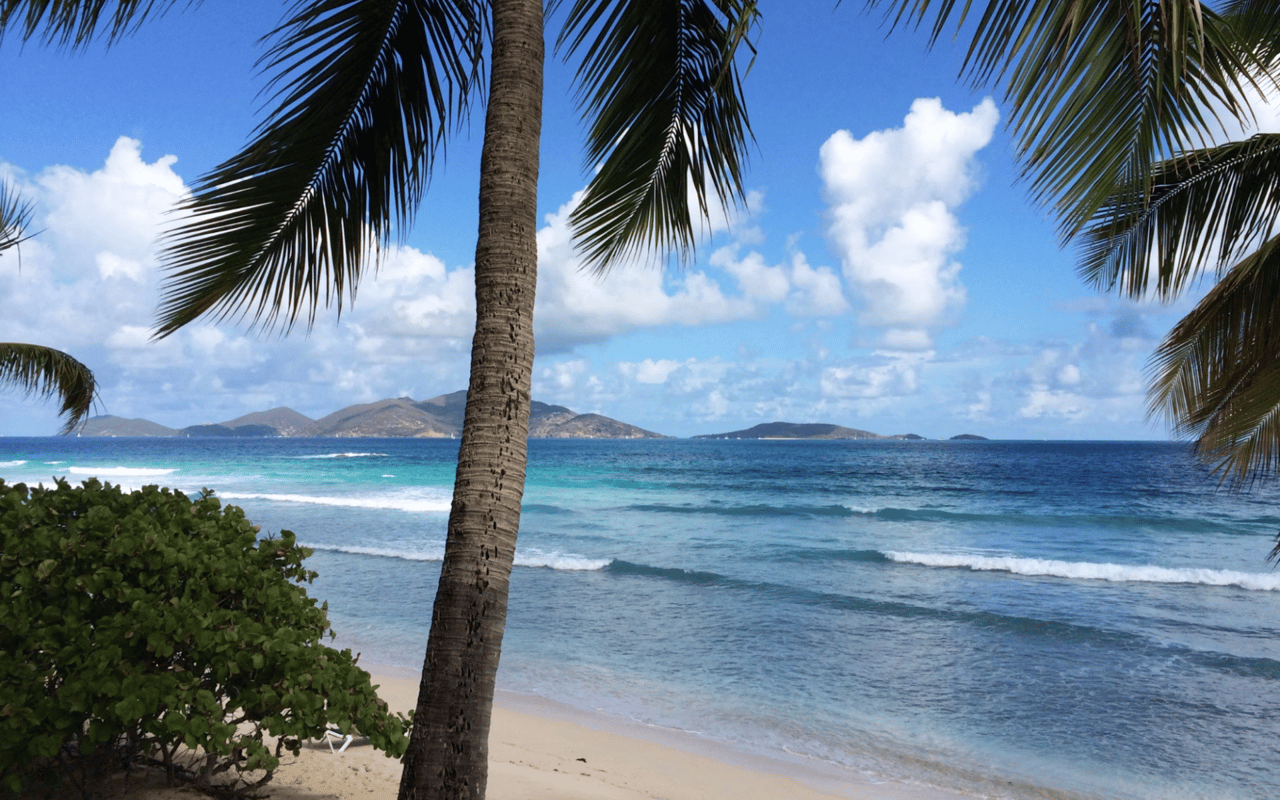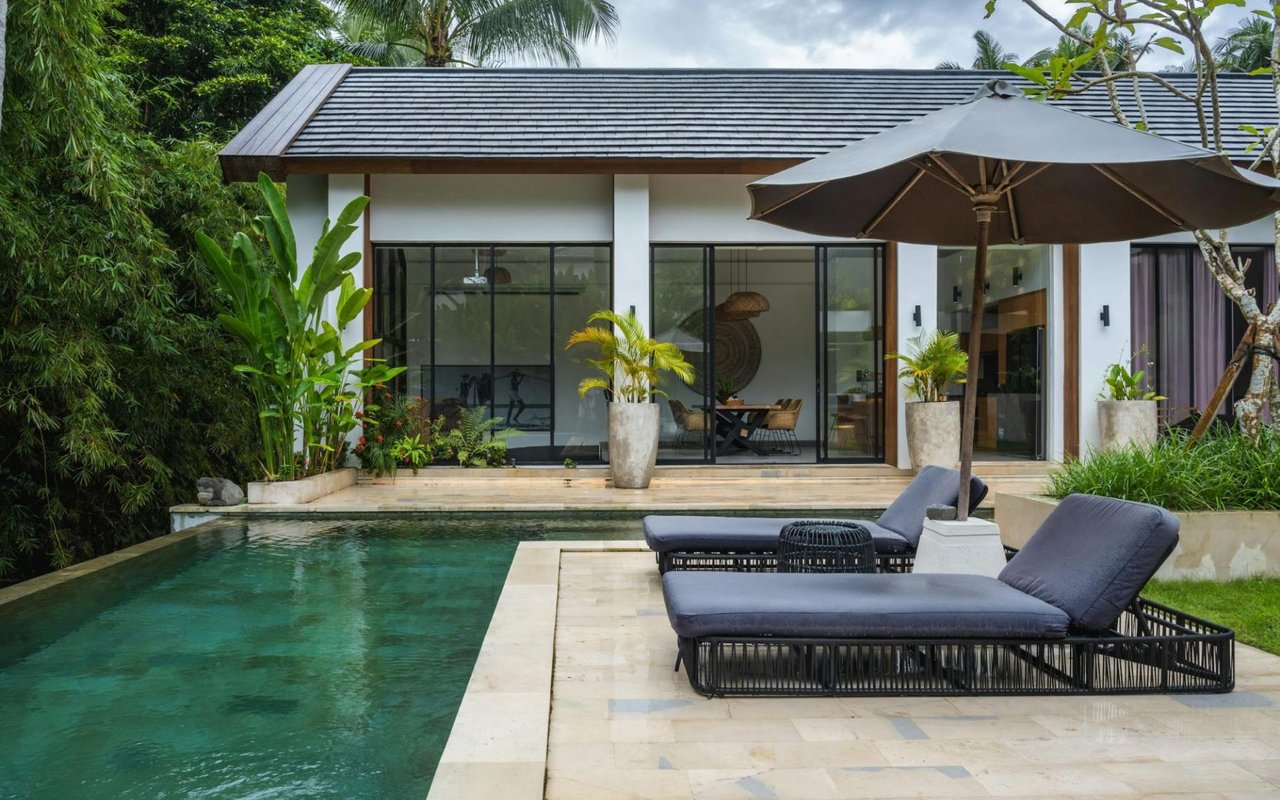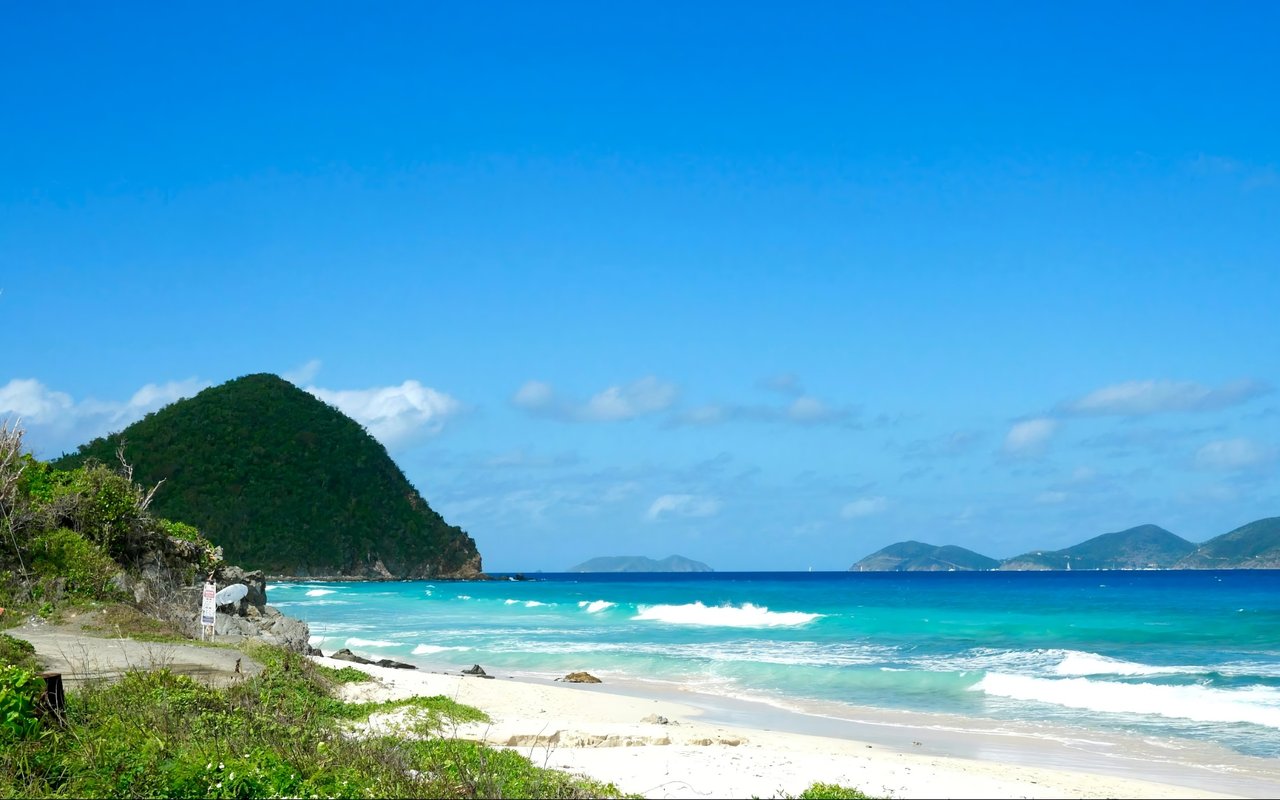
Tortola offers a uniquely alluring real estate landscape — pristine beaches, lush hillsides, and tranquil waters that draw buyers from around the world. But selling a home in Tortola works differently from almost any mainland market, and the differences are structural, not cosmetic. The British Virgin Islands has no centralized public Multiple Listing Service, a foreign-ownership framework that governs who can buy and when, and a transaction timeline measured in months rather than weeks.
Whether you're selling a waterfront villa, a hillside home, or a multi-unit investment property, understanding these realities up front is the difference between a smooth, well-priced sale and a listing that stalls. Here are eight things you might not know before you list.
1. The Local Market Runs on Scarcity, Not Volume
The first thing to understand is that the BVI is a low-liquidity, high-value market. Across the entire territory, only about 80 to 120 property transactions are recorded in a typical year, and Tortola — as the most populated island and the territory's economic engine — accounts for the largest share of them.
Activity divides sharply at the $1 million mark. The highest volume of sales happens below $1,000,000 and consists mostly of raw land, local residential homes, and multi-unit apartment buildings. Above $2–3 million, volume slows dramatically; a prime sub-district may see only a handful of luxury villa sales in an entire quarter, which means a single large transaction can swing the annual dollar-volume figures for that area.
Because there's no public sales registry updated in real time, accurate pricing and market reads come from the territory's primary brokerages — Smiths Gore, Coldwell Banker BVI, and BVI Sotheby's International Realty — which maintain the internal transaction records the open market lacks. As a seller, that scarcity works in your favor: limited inventory and high replacement costs keep a firm floor under asset values, so sellers rarely face pressure to slash prices.
2. Your Buyer Pool Is Split — and the Law Decides How
Roughly 60% of BVI buyers by transaction count are local Belongers, and about 40% are foreign Non-Belongers — though foreign buyers command a far larger share of total dollar volume. That split isn't a market accident; it's written into law.
Any property intended for sale to a foreign buyer must first be advertised in the local press for four consecutive weeks, giving local Belongers the right to purchase it at the exact same price. Foreign buyers also pay a 12% stamp duty (versus 4% for locals) and must wait months for government approval to purchase. The practical result is a two-tier market: locals dominate the under-$750k segment, often using local bank financing, while foreign capital concentrates almost entirely on luxury vacation villas, marina-facing condos, and private estate lots.
Knowing which pool your property speaks to shapes everything downstream — your pricing, your marketing, and your realistic timeline.
3. The Best Time to List Isn't When Sales Actually Close
Timing in the BVI involves a counterintuitive twist. Tourist arrivals surge from late November and peak between December and April, when stay-over visitors frequently reach 35,000 to 45,000 per month territory-wide — roughly four times the 10,000 to 12,000 seen during the August–October hurricane off-season. That winter surge of affluent visitors is exactly when property viewings peak.
The maritime calendar amplifies it. The BVI Spring Regatta & Sailing Festival, centered at Nanny Cay Marina on Tortola, anchors the end of the high season and funnels hundreds of ultra-high-net-worth sailors onto the island. Many international buyers are couples in their 50s who chartered or sailed the BVI for years before buying land — so this is a genuine pipeline, not just spectacle.
Here's the twist: if you look at the dates on final deeds at the Land Registry, transactions don't cluster in winter at all. They cluster in late summer and autumn (roughly July through November). That's because the emotional sale happens in the winter sunshine, but the foreign buyer's Non-Belonger Land Holding Licence then takes 6 to 12 months to clear, pushing the legal close half a year later.
For sellers, the strategy back-tracks from the winter rush:
| Phase | Months | What to Do |
|---|---|---|
| Preparation | August – October | Finish renovations, stage, finalize photography |
| Launch | November – December | Go live as tourist arrivals spike |
| The Peak | January – April | Maximize viewings during regatta season |
| The Paperwork | May onward | Enter escrow, navigate NBLHL toward a late-year close |
Smart brokerages aim to have new inventory staged, photographed, and listed no later than November so it's visible just as buyers plan their winter trips.
4. The Non-Belonger Land Holding Licence Governs Your Foreign Sale
If your buyer is a foreign national, the Non-Belonger Land Holding Licence (NBLHL) — regulated by the Ministry of Natural Resources and Labour — is the single biggest factor in your transaction. The process is documentation-heavy and runs through several layers of government:
- Sale & Purchase Agreement — signed, and explicitly conditional on the buyer securing an NBLHL.
- Four-week Belonger marketing period — the seller or broker advertises locally, giving Belongers first right of refusal at the same price.
- Ministry submission — if no Belonger steps forward, the buyer submits the formal application.
- Cabinet review — the Cabinet of the Virgin Islands approves or denies.
- Governor's execution — the final engrossed licence is formally executed.
- Registration — a registration fee is paid and the Instrument of Transfer is executed.
The buyer must supply an intensive personal portfolio: a completed application form, an original police certificate less than six months old, two character and two financial references, a year of bank statements, a certified valuation report, and a non-belonger survey map from a licensed BVI surveyor.
Government fees themselves are modest — $200 per individual applicant, $500 for a company, plus a nominal $2.50 registration fee — but the timeline is the real consideration. Although the official guidance cites 8 to 12 weeks, the realistic, real-world processing time is 6 to 9 months. (Note: NBLHLs on raw land usually carry a covenant requiring the buyer to build a dwelling within 2–3 years.) Sellers should structure expectations and contract terms around this lag, not the official estimate.
5. The Costs of Selling Are Fixed, Predictable — and Mostly the Buyer's
One of the most attractive features of selling in the BVI is how clean the exit math is. The headline 12% (or 4%) stamp duty is paid entirely by the buyer, and the BVI levies 0% capital gains tax on real estate — along with no inheritance tax, estate duty, gift tax, or corporate tax on property sales. Once you clear any local mortgage and minor fees, you can repatriate your proceeds without domestic tax penalty.
The seller's own costs are limited to two main line items:
- Real estate commission: 5% to 7% of the sale price for homes, villas, and commercial property; 7% to 10% for raw land or boat-access-only parcels. Commission is paid exclusively by the seller. If a buyer's agent from another firm is involved, the commission is typically split 50/50 — at no added cost to you.
- Legal/conveyancing fees: 1% to 2% of the price. Your attorney drafts the Sale and Purchase Agreement, secures tax clearance certificates, coordinates on the NBLHL, drafts the Instrument of Transfer, and discharges any existing mortgage (with local banks such as Republic Bank, Banco Popular, or FirstBank).
You'll also pay prorated property taxes up to the closing date (annual residential taxes are low, often $200–$1,000) and a minor mortgage discharge fee (~$200–$500).
Here's how the net math looks on a $1,500,000 villa sold by one foreign owner to a foreign buyer, mortgage already paid off:
| Line Item | Amount |
|---|---|
| Gross sale price | $1,500,000 |
| Less 6% commission | –$90,000 |
| Less 1.5% legal fees | –$22,500 |
| Less prorated taxes & admin | –$500 |
| Net to seller | ≈ $1,387,000 |
(The buyer, separately, pays roughly $180,000 in stamp duty plus about $25,000 in legal and survey fees on top of the purchase price.)
One caution: the Inland Revenue Department can audit the declared sale price. If it judges the price significantly below market, it assesses duty on an independent appraisal — and while that hits the buyer's pocket, a disputed valuation can delay the release of your funds.
6. Pricing Requires a Manual, Local Approach
With no public sold-data portal to scrape, pricing in Tortola can't be done with a few clicks. Properties generally fall into three tiers, anchored by construction replacement costs of roughly $350 to $550+ per square foot (driven by imported materials, hurricane-grade reinforced concrete, and hillside excavation):
- Tier 1 — Waterfront estates & marina residences: $2.5M–$15M+, benchmarked at $800–$1,500+ per sq. ft. Direct sea frontage or master-planned marina settings; valued on global luxury scarcity.
- Tier 2 — Premium hillside villas: $1.2M–$3.5M, at $450–$750 per sq. ft. Elevated estates like Belmont, Trunk Bay, or Shannon with panoramic channel views and infinity pools.
- Tier 3 — Standard hillside & multi-unit homes: $450k–$1.1M, at $250–$400 per sq. ft. Areas like Road Town outskirts, East End, or Sea Cows Bay, tied closely to local financing limits.
Specific features then layer on substantial premiums: a panoramic, unobstructed view adds 15–30%; gentle, easily accessed topography adds 10–20%; and true deep-water frontage with a private dock or mooring can add 35–50%+, the rarest and most valuable feature on the island.
A proper Comparative Market Analysis here is relationship-driven: a brokerage cross-references its own internal closing ledgers, verifies outside sales through Instrument of Transfer records at the BVI Land and Survey Department, applies a cost-approach calculation for custom-built homes, and finally calibrates against the three or four competing properties a buyer would tour on the same winter trip. Overpricing in a low-volume market is especially costly, because there are few comparable sales to justify a stretch.
7. Staging Means Selling a Lifestyle and Proving Resilience
International buyers aren't just buying interior square footage — they're buying an outdoor lifestyle, a specific view, and confidence that the home can withstand the elements. Effective staging reflects all three.
Buyers respond most to a few clear triggers. A formal entry gate acts as "gift wrapping," raising perceived value and security. Framing the view is paramount: orient furniture outward toward the water, open louvered shutters, and aggressively trim low-hanging trees and invasive brush below balconies to maximize sightlines to neighboring islands. And subtle infrastructure staging — clean cistern access points, an immaculate auto-switch generator housing, functional drip irrigation — quietly signals meticulous maintenance to buyers who fear tropical upkeep.
Landscaping should be climate-resilient and low-maintenance, since a delicate garden becomes a liability when the owner is off-island. Start by eradicating invasive Guinea Grass, then balance hardy color (bougainvillea, hibiscus, frangipani) with drought-tolerant ground cover (bromeliads). Mature fruit trees — mango, papaya, avocado — carry disproportionate emotional weight, and local stone terracing both prevents erosion and adds high-end texture on sloped lots.
Outdoors is where showings are won. Raise storm shutters and fully open folding doors so indoor and outdoor space flow seamlessly. Follow the "no-plastic" rule: stage with teak, premium rattan, or powder-coated aluminum and Sunbrella-grade fabrics in sandy neutrals and ocean blues. Set the veranda table with real place settings and linen, keep the pool crystal-clear with lounge chairs paired toward the view, and dress any outdoor shower with fresh teak mats and potted greenery.
8. A Local Expert Is Structurally Necessary — Not Just Helpful
Because the BVI transaction is fragmented and physical, trying to run it remotely invites delays and stalled deals. A connected local agent provides advantages that are nearly impossible to replicate from abroad.
The NBLHL now runs through a centralized digital portal that, in theory, shortens processing — but it enforces strict automated formatting, and low-resolution PDFs, wrong file types, or missing advertisement proof trigger automatic rejection. Established local agents and attorneys hold portal accounts with elevated privileges and direct lines to reviewing clerks, so a buyer's application is formatted correctly on day one rather than bouncing repeatedly from London or Toronto. A local expert also manages the four-week Belonger marketing mandate — tracking publication and securing the certified proof pages the Ministry requires — so that compliance window is watertight.
Just as important is access to off-market "shadow inventory." With no public MLS, many of Tortola's most active luxury and commercial deals happen quietly through private networks of expat professionals, repeat charterers, and generational landholders who prefer discretion. A local agent matches your property to a pre-vetted buyer pool instead of waiting on a web inquiry. And they coordinate the on-the-ground "friction team" — BVI attorney, Inland Revenue valuer, cadastral surveyor, and local bank officer — whose alignment is what actually gets a deal closed.
Frequently Asked Questions
Do I need a license to sell property in Tortola/BVI? If you're an individual selling your own home, villa, or land, no secondary license is required. You only need a Trade Licence (under the BVI Business Licensing Act, through the Virgin Islands Trade Commission) if you intend to operate as a third-party broker or property manager for profit.
How long does a property sale take in the BVI? A Belonger-to-Belonger sale can close in 30 to 60 days. If the buyer is a foreign national, expect 6 to 9 months, driven entirely by the multi-layered NBLHL approval process.
When is the best time to sell a home in Tortola? Launch your listing in November–December, as the tourism high season begins. That positions your property for maximum viewings during the January–April peak, including the BVI Spring Regatta crowd.
What are the costs of selling a home in the BVI? The seller typically pays a 5–7% commission (up to 10% for raw land) and 1–2% in legal fees, plus prorated property taxes to the closing date. Notably, the 12% stamp duty is paid by the buyer, and the BVI charges 0% capital gains tax.
Can foreigners buy my property in Tortola? Yes. The property must first be advertised locally for four consecutive weeks to give Belongers a right of first refusal. If no local buyer matches the offer, the foreign buyer proceeds by securing an NBLHL and paying the 12% stamp duty at closing.
Working With Smiths Gore
Selling in Tortola rewards precise timing, the right global and local audience, and minimal transaction friction — and that's where a trusted local partner matters most.
Smiths Gore has delivered bespoke real estate service in the British Virgin Islands since 1965, with more than 50 years of local expertise across residential and commercial sales, valuations, rentals, and property management. Its clients include regional governments, banks, financial institutions, and high-net-worth investors, and its global network gives your listing visibility well beyond the islands.
From pricing and staging through the NBLHL process and final close, the Smiths Gore team manages your transaction with care, discretion, and professionalism. If you're ready to move from research to execution, the first step is a direct, data-driven property consultation — whether you need a formal Comparative Market Analysis for an asset you own or a referral to trusted BVI legal counsel before listing.
Reach out to Smiths Gore today to get started.